




Africa largest book store
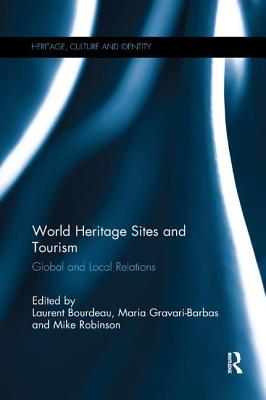
By: (Edited by) Laurent Bourdeau , (Edited by) Maria Gravari-Barbas , (Edited by) Mike Robinson
Werezi Extended Catalogue
Delivery in 28 days
Delivery fee
Delivery in 28 days
Tourism is now a central concern to the wide array of stakeholders involved with World Heritage Sites and indeed is often a primary motive for regions, states and communities to be put on the World Heritage List. Through a diverse range of cultural, natural and mixed World Heritage Sites in both developed and developing countries, this book examines the ways in which sites have been inscribed on the List and what this has meant in terms of practical issues of tourism management, carrying capacity and the experiences of tourists and local communities. It also looks at the ways being on the list shapes, and is shaped by, shifting values and politics at the macro and micro level.
Not all World Heritage Sites have people living within or close by their boundaries, but many do. The designation of World Heritage status brings a new dimension to the functioning of local communities and particularly through tourism. Too many tourists accentuated by the World Heritage label, or in some cases not enough tourists, despite anticipation of increased numbers, can act to disrupt and disturb relations within a community and between communities. Either way, tourism can be seen as a form of activity that can generate interest and concern as it is played out within World Heritage Sites. But the relationships that World Heritage Sites and their consequent tourism share with communities are not just a function of the number of tourists. The relationships are complex and ever changing as the communities themselves change and are built upon long-standing and wider contextual factors that stretch beyond tourism.
This volume, drawing upon a wide range of international cases relating to some 33 World Heritage Sites, reveals the multiple dimensions of the relations that exist between the sites and local communities. The designation of the sites can create, obscure and heighten the power relations between different parts of a community, between different communities and between the tourism and the heritage sector. Increasingly, the management of World Heritage is not only about the management of buildings and landscapes but about managing the communities that live and work in or near them.
Get World Heritage Sites and Tourism by at the best price and quality guranteed only at Werezi Africa largest book ecommerce store. The book was published by Taylor & Francis Ltd and it has pages. Enjoy Shopping Best Offers & Deals on books Online from Werezi - Receive at your doorstep - Fast Delivery - Secure mode of Payment