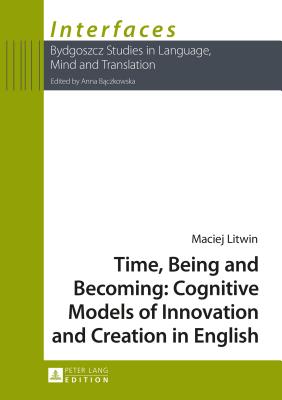
Cognitive linguistics offers tools to discuss philosophical problems of being and becoming (identity) as necessary or contingent. Major positions on these questions can be explained based on human counterfactual thought. Conceptualisations of «innovation» and «creation» in English (as instantiations of being and becoming) build on construal of time as actually experienced or figurative.
Cognitive linguistics provides tools to discuss identity as a process. Identity depends on the underlying conceptualisation of the present, while innovation and creation are borderline phenomena in epistemology. The two may be seen as generalised accounts of causation as a process: open-ended and closed, where time is conceptualised as real or figurative. Aristotle’s epistemology builds on the conceptualisation of a subject manipulating objects in the visual field. Saint Augustine and Plotinus conceive of time and identity as real and contingent or figurative and necessary. William of Ockham builds on a simple conceptualisation of a time-point matrix as opposed to a duration matrix. British National Corpus findings relate to and comment on these expert philosophical conversations through the medium of cognitive models of «innovation» and «creation», instruments of thought and reason in English.
Get Time, Being and Becoming: Cognitive Models of Innovation and Creation in English by at the best price and quality guranteed only at Werezi Africa largest book ecommerce store. The book was published by Peter Lang AG and it has pages. Enjoy Shopping Best Offers & Deals on books Online from Werezi - Receive at your doorstep - Fast Delivery - Secure mode of Payment