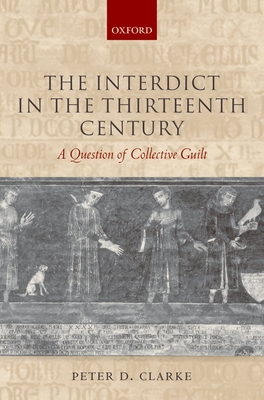
The Catholic Church extended its authority over many areas of life in the Later Middle Ages, and this increasingly led it into political conflicts with kings and other rulers. In this book, Peter Clarke focuses on one of the Church''s chief weapons in these struggles - the interdict. A sanction that could be imposed on an entire kingdom, an interdict was similar to a strike in which clergy closed churches and refused to perform most religious ministrations. It was therefore a major event in medieval society, and this book is the first in-depth treatment of this phenomenon, exploring the issues of collective guilt and responsibility that are still important today.
The interdict was an important and frequent event in medieval society. It was an ecclesiastical sanction which had the effect of closing churches and suspending religious services. Often imposed on an entire community because its leaders had violated the rights and laws of the Church, popes exploited it as a political weapon in their conflicts with secular rulers during the thirteenth century. In this book, Peter Clarke examines this significant but neglected subject, presenting a wealth of new evidence drawn from manuscripts and archival sources. He begins by exploring the basic legal and moral problem raised by the interdict: how could a sanction that punished many for the sins of the few be justified? From the twelfth-century, jurists and theologians argued that those who consented to the crimes of others shared in the responsibility and punishment for them. Hence important questions are raised about medieval ideas of community, especially about the relationship between its head and members. The book goes on to explore how the interdict was meant to work according to the medieval canonists, and how it actually worked in practice. In particular it examines princely and popular reactions to interdicts and how these encouraged the papacy to reform the sanction in order to make it more effective. Evidence including detailed case-studies of the interdict in action, is drawn from across thirteenth-century Europe - a time when the papacy''s legislative activity and interference in the affairs of secular rulers were at their height.
Get The Interdict in the Thirteenth Century by at the best price and quality guranteed only at Werezi Africa largest book ecommerce store. The book was published by Oxford University Press and it has pages. Enjoy Shopping Best Offers & Deals on books Online from Werezi - Receive at your doorstep - Fast Delivery - Secure mode of Payment