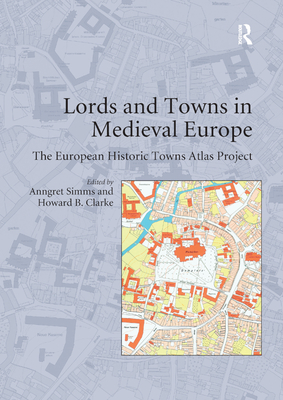
This volume is the first publication to draw upon the mass of information provided by the Historic Towns Atlases in order to explore comparative questions in medieval urban history. The volume addresses the wider question of comparative urban studies, the processes that determined the morphological formation of towns, and the symbolic meaning of la
This volume is based on possibly the biggest single Europe-wide project in urban history. In 1955 the International Commission for the History of Towns established the European historic towns atlas project in accordance with a common scheme in order to encourage comparative urban studies. Although advances in urban archaeology since the 1960s have highlighted the problematic relationship between the oldest extant town plan and the actual origins of a town, the large-scale cadastral maps as they have been made available by the European historic towns atlas project are still necessary if we want to understand the evolution of the physical form of our towns. By 2014 the project consisted of over 500 individual publications from over 18 different countries across Europe. Each atlas comprises at least a core-map at the scale of 1:2500, analytical maps and an explanatory text. The time has come to use this enormous database that has been compiled over the last 40 years. This volume, itself based on a conference related to this topic that was held in the Royal Irish Academy in Dublin in 2006, takes up this challenge. The focus of the volume is on the question of how seigneurial power influenced the creation of towns in medieval Europe and of how this process in turn influenced urban form. Part I of the volume addresses two major issues: the history of the use of town plans in urban research and the methodological challenges of comparative urban history. Parts II and III constitute the core of the book focusing on the dynamic relationship between lordship and town planning in the core area of medieval Europe and on the periphery. In Part IV the symbolic meaning of town plans for medieval people is discussed. Part V consists of critical contributions by an archaeologist, an art historian and an historical geographer. By presenting case studies by leading researchers from different European countries, this volume combines findings that were hitherto not available in English
Get Lords and Towns in Medieval Europe by at the best price and quality guranteed only at Werezi Africa largest book ecommerce store. The book was published by Taylor & Francis Ltd and it has pages. Enjoy Shopping Best Offers & Deals on books Online from Werezi - Receive at your doorstep - Fast Delivery - Secure mode of Payment