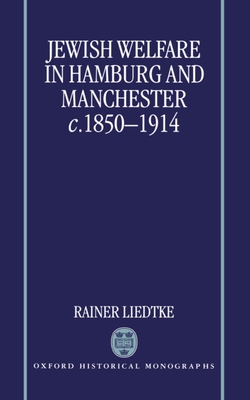
Organized Jewish welfare was a vital element in the formation and maintenance of British and German Jewish subcultures. The analysis of this important sphere of everyday life highlights the relevance of comparative history for an understanding of Jewish integration and identity formation in nineteenth-century Europe.
This comparative history of Jewish welfare in Hamburg and Manchester highlights Jewish integration and identity formation in nineteenth-century Europe. Despite their fundamentally different historical experiences, the Jews of both cities displayed very similar patterns of welfare organization. This is illustrated by an analysis of community-wide Jewish welfare bodies and institutions, provisions for Eastern European Jewish immigrants and transmigrants, the importance of women in Jewish welfare, and the function of specialized Jewish voluntary welfare associations.The realm of welfare was vital for the preservation of secular Jewish identities and the maintenance of internal social balances. Dr Liedtke demonstrates how these virtually self-sufficient Jewish welfare systems became important components of distinctive Jewish subcultures. He shows that, though it was intended to promote Jewish integration, the separate organization of welfare in practice served to segregate Jews from non-Jews in this very important sphere of everyday life.
Get Jewish Welfare in Hamburg and Manchester, c.1850-1914 by at the best price and quality guranteed only at Werezi Africa largest book ecommerce store. The book was published by Oxford University Press and it has pages. Enjoy Shopping Best Offers & Deals on books Online from Werezi - Receive at your doorstep - Fast Delivery - Secure mode of Payment