




Search

Categories

    • categories-img Jacket, Women
    • categories-img Woolend Jacket
    • categories-img Western denim
    • categories-img Mini Dresss
    • categories-img Jacket, Women
    • categories-img Woolend Jacket
    • categories-img Western denim
    • categories-img Mini Dresss
    • categories-img Jacket, Women
    • categories-img Woolend Jacket
    • categories-img Western denim
    • categories-img Mini Dresss
    • categories-img Jacket, Women
    • categories-img Woolend Jacket
    • categories-img Western denim
    • categories-img Mini Dresss
    • categories-img Jacket, Women
    • categories-img Woolend Jacket
    • categories-img Western denim
    • categories-img Mini Dresss

Filter By Price

$
-
$

Dietary Needs

Top Rated Product

product-img product-img

Modern Chair

$165.00
product-img product-img

Plastic Chair

$165.00
product-img product-img

Design Rooms

$165.00

Brands

  • Wooden
  • Chair
  • Modern
  • Fabric
  • Shoulder
  • Winter
  • Accessories
  • Dress

Welcome and thank you for visiting us. For any query call us on 0799 626 359 or Email [email protected]

Offcanvas Menu Open

Shopping Cart

Africa largest book store
Sub Total:

Search for any Title

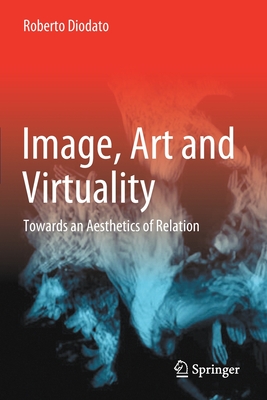
Image, Art and Virtuality : Towards an Aesthetics of Relation - 2021 ed.

By: (Author) Roberto Diodato

Werezi Extended Catalogue
Delivery in 34 days

Ksh 13,500.00

Format: Paperback / Softback

ISBN-10: 3030677869

ISBN-13: 9783030677862

Edition: 2021 ed.

Publisher: Springer Nature Switzerland AG

Imprint: Springer Nature Switzerland AG

Country of Manufacture: GB

Country of Publication: GB

Publication Date: Mar 3rd, 2022

Print length: 94 Pages

Choose your Location

Shipping & Delivery

Door Delivery

Delivery fee

Delivery in 34 days

  • Description

  • Reviews

This book investigates the ontological state of relations in a unique way. Starting with the notion of system, it shows that the system can be understood as a relational structure, and that relations can be assessed within themselves, with no need to transform relations in elements. “Relations” are understood in contrast to “relational property”: without a relation there is no identity, therefore no existence. What allows us to do that without hypostatizing the relation, and without immediately taking it simply as a causal relation, can be better grasped, possibly, in reference to a few entities that make best display of their systemic nature, for example images, works of art, and virtual bodies. This book shows how virtual bodies are ontological hybrids representing a type of entity that has never appeared in the world before. This entity becomes a phenomenon in interactivity and evades the dichotomy between “external” and “internal”; it is neither a cognitive product of theconsciousness, nor an image of the mind. The user is well aware of experiencing anotherreality, also in the sense of a paradoxical reduplication of perceptual synthesis. The virtual body-environment is therefore simultaneously external and internal, with virtual bodies-environments to be seen as artificial windows to an intermediary world. In this intermediary world, the space itself is the result of interactivity; the world takes place in the sense or feeling of immersion experienced by the user; and the body, perceived as “other”, takes upon itself the sense of its reality, of its effectiveness, as an imaginary and pathic incision, as a production of desire and emotion, to the point that the feeling of reality conveyed by a virtual environment will rely significantly on how this environment produces emotions in the users.

This book investigates the ontological state of relations in a unique way. Starting with the notion of system, it shows that the system can be understood as a relational structure, and that relations can be assessed within themselves, with no need to transform relations in elements. "Relations" are understood in contrast to "relational property": without a relation there is no identity, therefore no existence. What allows us to do that without hypostatizing the relation, and without immediately taking it simply as a causal relation, can be better grasped, possibly, in reference to a few entities that make best display of their systemic nature, for example images, works of art, and virtual bodies.

This book shows how virtual bodies are ontological hybrids representing a type of entity that has never appeared in the world before. This entity becomes a phenomenon in interactivity and evades the dichotomy between "external" and "internal"; it is neither a cognitive product of the consciousness, nor an image of the mind. The user is well aware of experiencing anotherreality, also in the sense of a paradoxical reduplication of perceptual synthesis. The virtual body-environment is therefore simultaneously external and internal, with virtual bodies-environments to be seen as artificial windows to an intermediary world. In this intermediary world, the space itself is the result of interactivity; the world takes place in the sense or feeling of immersion experienced by the user; and the body, perceived as "other", takes upon itself the sense of its reality, of its effectiveness, as an imaginary and pathic incision, as a production of desire and emotion, to the point that the feeling of reality conveyed by a virtual environment will rely significantly on how this environment produces emotions in the users.


Get Image, Art and Virtuality by at the best price and quality guranteed only at Werezi Africa largest book ecommerce store. The book was published by Springer Nature Switzerland AG and it has pages. Enjoy Shopping Best Offers & Deals on books Online from Werezi - Receive at your doorstep - Fast Delivery - Secure mode of Payment


Customer Reviews

Based on 0 reviews

Mind, Body, & Spirit