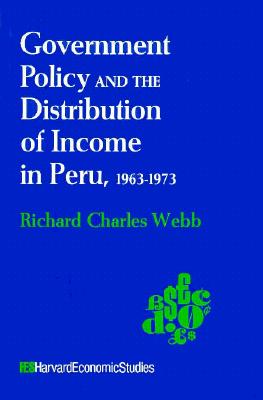
The redistribution of income has been a key element in Peruvian governmental policy. Both the Belaunde and Velasco regimes professed a deep concern with economic injustice, and they have been regarded as models of peaceful progress toward social justice. Despite its good intentions, Richard Webb shows, the government has had little impact on the rigid imbalance of wealth in Peru. The rich have continued to get richer faster than the poor have got less poor. Inequality has grown, and those most in need of improvement have benefited least. The tax structure has actually become more regressive. with taxes raised most on middle-income groups and least on the very rich. Overall, the Peruvian government's economic policy has been mildly progressive, but not progressive enough to have an appreciable effect on the widespread poverty. What is needed, Webb argues, are movements of capital from the modern sector of the economy to the traditional sector to create new jobs for the poor. "Finally, substantial redistribution seems to require changes in attitude. The elimination of poverty must precede a concern for equity per se, and the needs of the very poor must acquire the status of rights rather than claims to compassion."
Get Government Policy and the Distribution of Income in Peru, 1963–1973 by at the best price and quality guranteed only at Werezi Africa largest book ecommerce store. The book was published by Harvard University Press and it has pages. Enjoy Shopping Best Offers & Deals on books Online from Werezi - Receive at your doorstep - Fast Delivery - Secure mode of Payment