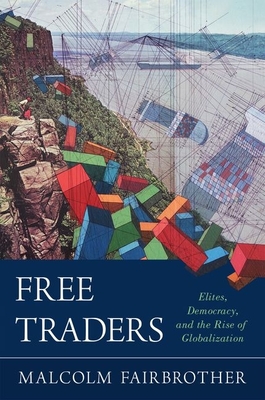
In Free Traders, Malcolm Fairbrother argues that politicians'' embrace of globalization was much less impacted by public preferences than the agendas of various firms and elites. Drawing on over one hundred interviews with decision-makers, and analyses of archival materials from United States, Mexico, and Canada, Fairbrother uses both NAFTA and individual cases from each country to tell the story of how they negotiated and ratified agreements that substantially opened and integrated their economies.
Today''s global economy was largely established by political events and decisions in the 1980s and 90s, when scores of nations opened up their economies to the forces of globalization. In Free Traders, Malcolm Fairbrother argues that politicians'' embrace of globalization was much less motivated by public preferences than by the agendas of businesspeople and other elites. Drawing on over one hundred interviews with decision-makers, and analyses of archival materials from Canada, Mexico, and the U.S., Fairbrother tells the story of how each country negotiated and ratified two agreements that substantially opened and integrated their economies: the 1989 Canada-U.S. and trilateral 1994 North American Free Trade Agreement. Contrary to what many commentators believe, these agreements-like free trade elsewhere-were based less on mainstream, neoclassical economics than on the informal, self-serving economic ideas of business. While the stakes in the globalization debate remain high, Free Traders uses a comparative-historical approach to sharpen our understanding of how globalization arose in the past to provide us with clearer trajectory for how it will develop in the future.
Get Free Traders by at the best price and quality guranteed only at Werezi Africa largest book ecommerce store. The book was published by Oxford University Press Inc and it has pages. Enjoy Shopping Best Offers & Deals on books Online from Werezi - Receive at your doorstep - Fast Delivery - Secure mode of Payment