




Africa largest book store
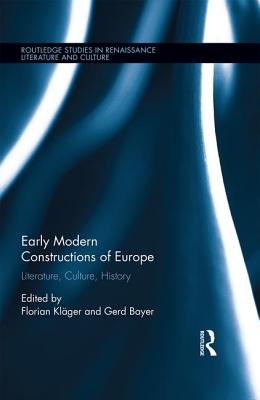
By: (Edited by) Florian Klager , (Edited by) Gerd Bayer
Werezi Extended Catalogue
Delivery in 34 days
Delivery fee
Delivery in 34 days
This book examines the pre-history of the idea of Europe, asking how and why Europe was imagined, from both within and without, between 1450 and 1750. It discusses European-ness as the product of dynamic processes of identification involving factors such as literary genres, classical antiquity, language, religion, politics, and geography. Studying the role of tradition and lived experience of early modern Europe, it also identifies anticipatory elements in the construction of European-ness that may remain effective today. Essays consider early modern plays, poems, and narrative fiction, as well as cartography, historiography, iconography, travelogues, periodicals, and political polemics.
Between the medieval conception of Christendom and the political visions of modernity, ideas of Europe underwent a transformative and catalytic period that saw a cultural process of renewed self-definition or self-Europeanization. The contributors to this volume address this process, analyzing how Europe was imagined between 1450 and 1750. By whom, in which contexts, and for what purposes was Europe made into a subject of discourse? Which forms did early modern Europes take, and what functions did they serve? Essays examine the role of factors such as religion, history, space and geography, ethnicity and alterity, patronage and dynasty, migration and education, language, translation, and narration for the ways in which Europe turned into an imagined community. The thematic range of the volume comprises early modern texts in Arabic, English, French, German, Greek, Italian, Latin, and Spanish, including plays, poems, and narrative fiction, as well as cartography, historiography, iconography, travelogues, periodicals, and political polemics. Literary negotiations in particular foreground the creative potential, versatility, and agency that inhere in the process of Europeanization, as well as a specifically early modern attitude towards the past and tradition emblematized in the poetics of the period. There is a clear continuity between the collections approach to European identities and the focus of cultural and postcolonial studies on the constructed nature of collective identities at large: the chapters build on the insights produced by these fields over the past decades and apply them, from various angles, to a subject that has so far largely eluded critical attention. This volume examines what existing and well-established work on identity and alterity, hybridity and margins has to contribute to an understanding of the largely un-examined and under-theorized pre-formative period of European identity.
Get Early Modern Constructions of Europe by at the best price and quality guranteed only at Werezi Africa largest book ecommerce store. The book was published by Taylor & Francis Ltd and it has pages. Enjoy Shopping Best Offers & Deals on books Online from Werezi - Receive at your doorstep - Fast Delivery - Secure mode of Payment