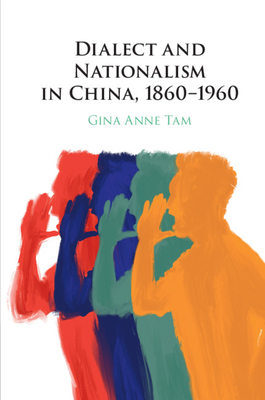
Challenging the widely accepted narrative that national languages create national identity, Tam narrates the history of the Chinese nation and Chinese nationalism from the perspective of fangyan - dialects or regional languages distinct from Mandarin - and in so doing, shows how they were central to the making of modern nationalism in China.
Taking aim at the conventional narrative that standard, national languages transform ''peasants'' into citizens, Gina Anne Tam centers the history of the Chinese nation and national identity on fangyan - languages like Shanghainese, Cantonese, and dozens of others that are categorically different from the Chinese national language, Mandarin. She traces how, on the one hand, linguists, policy-makers, bureaucrats and workaday educators framed fangyan as non-standard ''variants'' of the Chinese language, subsidiary in symbolic importance to standard Mandarin. She simultaneously highlights, on the other hand, the folksong collectors, playwrights, hip-hop artists and popular protestors who argued that fangyan were more authentic and representative of China''s national culture and its history. From the late Qing through the height of the Maoist period, these intertwined visions of the Chinese nation - one spoken in one voice, one spoken in many - interacted and shaped one another, and in the process, shaped the basis for national identity itself.
Get Dialect and Nationalism in China, 1860–1960 by at the best price and quality guranteed only at Werezi Africa largest book ecommerce store. The book was published by Cambridge University Press and it has pages. Enjoy Shopping Best Offers & Deals on books Online from Werezi - Receive at your doorstep - Fast Delivery - Secure mode of Payment