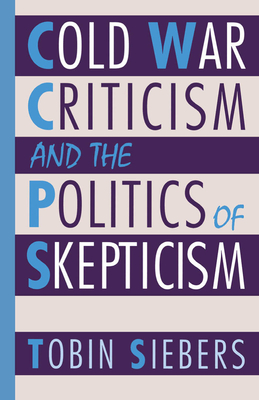
Claiming that a Cold War mentality has impaired the ability of literary theorists to talk about the politics of criticism effectively, the author argues that modern criticism is a child of the Cold War.
In Cold War Criticism, Tobin Siebers claims that modern criticism is a Cold War criticism. Postwar literary theory has absorbed the scepticism, suspicion and paranoia of the Cold War mentality, and it plays them out in debates about the divided self, linguistic indeterminacy, the metaphysics of presence, multiculturalism, canon formation, power, cultural literacy and the politics of literature. The major critical movements of the postwar age, Siebers argues, belong to three dominant phases of the Cold War era. The age of charismatic leadership (Churchill, FDR, Stalin, and Hitler) lies behind the preoccupation with "intention", "effect" and "impersonality" found in the New Criticism. The age of propaganda motivates the fascination with the guiles of language, undecidability and deconstruction. The age of superpowers provides the dominant metaphor in the new historicism''s analysis of the technology of power. All three ages of criticism reflect Cold War Scepticism as it has impaired the ability of literary theorists to talk effectively about the politics of criticism. Supporting his claims with polemical readings from such figures as Arendt, Bloom, deMan, Lyotard, Siebers offers a new and often surprising vision of what theory must do if it is to enter the post Cold War era suiccessfully.
Get Cold War Criticism and the Politics of Skepticism by at the best price and quality guranteed only at Werezi Africa largest book ecommerce store. The book was published by Oxford University Press Inc and it has pages. Enjoy Shopping Best Offers & Deals on books Online from Werezi - Receive at your doorstep - Fast Delivery - Secure mode of Payment