




Search

Categories

    • categories-img Jacket, Women
    • categories-img Woolend Jacket
    • categories-img Western denim
    • categories-img Mini Dresss
    • categories-img Jacket, Women
    • categories-img Woolend Jacket
    • categories-img Western denim
    • categories-img Mini Dresss
    • categories-img Jacket, Women
    • categories-img Woolend Jacket
    • categories-img Western denim
    • categories-img Mini Dresss
    • categories-img Jacket, Women
    • categories-img Woolend Jacket
    • categories-img Western denim
    • categories-img Mini Dresss
    • categories-img Jacket, Women
    • categories-img Woolend Jacket
    • categories-img Western denim
    • categories-img Mini Dresss

Filter By Price

$
-
$

Dietary Needs

Top Rated Product

product-img product-img

Modern Chair

$165.00
product-img product-img

Plastic Chair

$165.00
product-img product-img

Design Rooms

$165.00

Brands

  • Wooden
  • Chair
  • Modern
  • Fabric
  • Shoulder
  • Winter
  • Accessories
  • Dress

Welcome and thank you for visiting us. For any query call us on 0799 626 359 or Email [email protected]

Offcanvas Menu Open

Shopping Cart

Africa largest book store
Sub Total:

Search for any Title

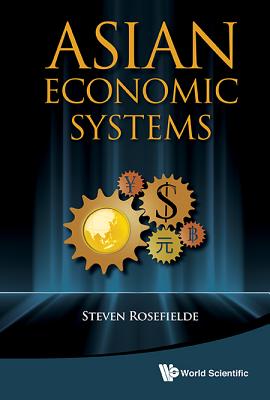
Asian Economic Systems

By: (Author) Steven Rosefielde

Werezi Extended Catalogue
Delivery in 28 days

Ksh 9,200.00

Format: Paperback / Softback

ISBN-10: 9813224843

ISBN-13: 9789813224841

Publisher: World Scientific Publishing Co Pte Ltd

Imprint: World Scientific Publishing Co Pte Ltd

Country of Manufacture: GB

Country of Publication: GB

Publication Date: May 29th, 2013

Print length: 296 Pages

Product Classification: Economic systems & structures

Choose your Location

Shipping & Delivery

Door Delivery

Delivery fee

Delivery in 28 days

  • Description

  • Reviews

Asian Economic Systems provides readers with a crisp analytic framework, concepts and narrative highlighting contemporary Asia's systemic diversity. The framework facilitates insightful comparison with the western neoclassical ideal. This method allows students to easily appreciate the special virtues of various Asian economic systems, and compare them with those offered in the west. This objective is buttressed with background material on Asian economic history where appropriate, together with basic data on Asian and global economic performance to help students integrate concepts with experience.The approach provides an objective platform for discussing Asia's place and future in the new global order. It makes it clear that there is no universally best economic system. There are a variety of good systems and nations should choose the system that best suits their cultural heritage, values and aspirations.The approach informs discussions about the wisdom of forming regional free trade zones, economic communities (like ASEAN), and unions (analogous to the European Union), as well as forging a one-world system of economic governance.Also, Asian Economic Systems has a secondary goal. It provides the tools needed for training students in how to apply microeconomic, macroeconomic and financial principles to practical issues of systems and policies. The book focuses on East and Southeast Asia. The term Asia is used as a shorthand for the cultural region dominated historically by Confucian kinship networks, Japanese communalism and Theravada Buddhism, and more recently by Marxist-Leninist communism. It excludes the Middle East, Central Asia, the Himalayan states, South Asia, Malaysia, Indonesia, the Philippines, Russia and America's Asia Pacific possessions.The book identifies and elaborates four rival market systems in contemporary Asia each with its own distinctive performance characteristics, potentials and humanist properties: (1) communist (China, Vietnam, Laos and Cambodia), (2) Confucian (Taiwan, Singapore, Hong Kong, and South Korea), (3) communal (Japan), and (4) Theravada Buddhist (Thailand and Sri Lanka). Their comparative merit is partly obscured by differences in stages of economic development, epochal, and conjunctural factors, but their special positive and negative attributes are unmistakable, and are compared with North Korea's communist command system which is the region's fifth core alternative to democratic free enterprise.

Asian Economic Systems provides readers with a crisp analytic framework, concepts and narrative highlighting contemporary Asia's systemic diversity. The framework facilitates insightful comparison with the western neoclassical ideal. This method allows students to easily appreciate the special virtues of various Asian economic systems, and compare them with those offered in the west. This objective is buttressed with background material on Asian economic history where appropriate, together with basic data on Asian and global economic performance to help students integrate concepts with experience.

The approach provides an objective platform for discussing Asia's place and future in the new global order. It makes it clear that there is no universally best economic system. There are a variety of good systems and nations should choose the system that best suits their cultural heritage, values and aspirations.

The approach informs discussions about the wisdom of forming regional free trade zones, economic communities (like ASEAN), and unions (analogous to the European Union), as well as forging a one-world system of economic governance.

Also, Asian Economic Systems has a secondary goal. It provides the tools needed for training students in how to apply microeconomic, macroeconomic and financial principles to practical issues of systems and policies.

The book focuses on East and Southeast Asia. The term Asia is used as a shorthand for the cultural region dominated historically by Confucian kinship networks, Japanese communalism and Theravada Buddhism, and more recently by Marxist–Leninist communism. It excludes the Middle East, Central Asia, the Himalayan states, South Asia, Malaysia, Indonesia, the Philippines, Russia and America's Asia Pacific possessions.

The book identifies and elaborates four rival market systems in contemporary Asia each with its own distinctive performance characteristics, potentials and humanist properties: (1) communist (China, Vietnam, Laos and Cambodia), (2) Confucian (Taiwan, Singapore, Hong Kong, and South Korea), (3) communal (Japan), and (4) Theravada Buddhist (Thailand and Sri Lanka). Their comparative merit is partly obscured by differences in stages of economic development, epochal, and conjunctural factors, but their special positive and negative attributes are unmistakable, and are compared with North Korea's communist command system which is the region's fifth core alternative to democratic free enterprise.


Get Asian Economic Systems by at the best price and quality guranteed only at Werezi Africa largest book ecommerce store. The book was published by World Scientific Publishing Co Pte Ltd and it has pages. Enjoy Shopping Best Offers & Deals on books Online from Werezi - Receive at your doorstep - Fast Delivery - Secure mode of Payment


Customer Reviews

Based on 0 reviews

Mind, Body, & Spirit