




Search

Categories

    • categories-img Jacket, Women
    • categories-img Woolend Jacket
    • categories-img Western denim
    • categories-img Mini Dresss
    • categories-img Jacket, Women
    • categories-img Woolend Jacket
    • categories-img Western denim
    • categories-img Mini Dresss
    • categories-img Jacket, Women
    • categories-img Woolend Jacket
    • categories-img Western denim
    • categories-img Mini Dresss
    • categories-img Jacket, Women
    • categories-img Woolend Jacket
    • categories-img Western denim
    • categories-img Mini Dresss
    • categories-img Jacket, Women
    • categories-img Woolend Jacket
    • categories-img Western denim
    • categories-img Mini Dresss

Filter By Price

$
-
$

Dietary Needs

Top Rated Product

product-img product-img

Modern Chair

$165.00
product-img product-img

Plastic Chair

$165.00
product-img product-img

Design Rooms

$165.00

Brands

  • Wooden
  • Chair
  • Modern
  • Fabric
  • Shoulder
  • Winter
  • Accessories
  • Dress

Welcome and thank you for visiting us. For any query call us on 0799 626 359 or Email [email protected]

Offcanvas Menu Open

Shopping Cart

Africa largest book store
Sub Total:

Search for any Title

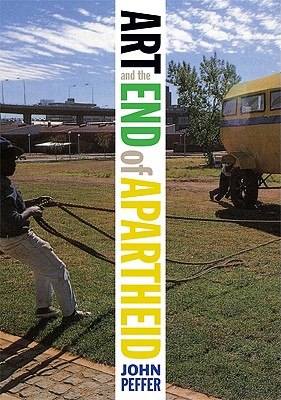
Art and the End of Apartheid

By: (Author) John Peffer

Werezi Extended Catalogue
Delivery in 34 days

Ksh 4,750.00

Format: Paperback / Softback

ISBN-10: 0816650020

ISBN-13: 9780816650026

Publisher: University of Minnesota Press

Imprint: University of Minnesota Press

Country of Manufacture: US

Country of Publication: GB

Publication Date: Mar 1st, 2009

Print length: 352 Pages

Weight: 790 grams

Dimensions (height x width x thickness): 18.20 x 25.50 x 2.40 cms

Product Classification: Art & design styles: from c 1960

Choose your Location

Shipping & Delivery

Door Delivery

Delivery fee

Delivery in 34 days

  • Description

  • Reviews

The first book to fully explore cosmopolitan modern art by black South Africans under apartheidBlack South African artists have typically had their work labeled “African art” or “township art,” qualifiers that, when contrasted with simply “modernist art,” have been used to marginalize their work both in South Africa and internationally. In Art and the End of Apartheid, John Peffer considers in depth the work of black South African artists in the decades leading up to the end of apartheid in 1994. Peffer examines painting and graphic art, photography, avant-garde and performance art, and popular and protest art through artist collectives (such as the Thupelo Art Project and the Medu Art Ensemble) and individuals such as Durant Sihlali and Santu Mofokeng. He shows how South African artists imagined what “postapartheid” could mean during the time of apartheid, even as they struggled with immediate issues of censorship, militancy, street violence and torture, and, more broadly, the problem of self-representation and the social role of art. Peffer describes how, in defiance of the racial polarization that surrounded them, South African artists created “grey areas,” nonracialized spaces and hybrid art forms in which both black and white South Africans collaborated. Beyond the boundaries of apartheid, these artists forged connections at home and abroad that modeled a future, more democratic society.

The first book to fully explore cosmopolitan modern art by black South Africans under apartheid

Black South African artists have typically had their work labeled “African art” or “township art,” qualifiers that, when contrasted with simply “modernist art,” have been used to marginalize their work both in South Africa and internationally.

In Art and the End of Apartheid, John Peffer considers in depth the work of black South African artists in the decades leading up to the end of apartheid in 1994. Peffer examines painting and graphic art, photography, avant-garde and performance art, and popular and protest art through artist collectives (such as the Thupelo Art Project and the Medu Art Ensemble) and individuals such as Durant Sihlali and Santu Mofokeng. He shows how South African artists imagined what “postapartheid” could mean during the time of apartheid, even as they struggled with immediate issues of censorship, militancy, street violence and torture, and, more broadly, the problem of self-representation and the social role of art.

Peffer describes how, in defiance of the racial polarization that surrounded them, South African artists created “grey areas,” nonracialized spaces and hybrid art forms in which both black and white South Africans collaborated. Beyond the boundaries of apartheid, these artists forged connections at home and abroad that modeled a future, more democratic society.


Get Art and the End of Apartheid by at the best price and quality guranteed only at Werezi Africa largest book ecommerce store. The book was published by University of Minnesota Press and it has pages. Enjoy Shopping Best Offers & Deals on books Online from Werezi - Receive at your doorstep - Fast Delivery - Secure mode of Payment


Customer Reviews

Based on 0 reviews

Mind, Body, & Spirit