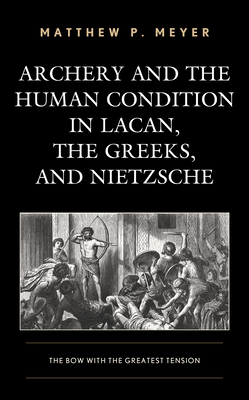
In this book, Matthew P. Meyer analyzes the archer and the bow as a metaphor for the human condition in Lacan, Nietzsche, and Greek literature. The bow is a model of the tension at the heart of the human condition, while the archer is a symbol of control.
Archery and the Human Condition in Lacan, the Greeks, and Nietzsche showcases archery as a metaphor for the fundamental tension at the heart of the human condition. Matthew Meyer develops a theory of subjectivity that incorporates elements from psychoanalysis, Greek literature, philosophy, and Zen archery, bringing together allusions to the bow and archery made by Sophocles, Homer, Heraclitus, Aristotle, Lacan, Nietzsche, and Awa Kenzo. The book weaves together a psychoanalytic account of infant development, the obstacles faced by Greek heroes, and virtue theory to explore the tension between the forces inside and outside of the human that subject it to conditions beyond its control. Meyer develops this side of the tension through Jacques Lacan’s theory of human drive, illustrating the three parts of drive theory through application to three works in Greek literature and philosophy. The second part of the text describes the other side of this fundamental tension--the ability to control drive impulses—through Aristotle’s use of the archer as a metaphor in his virtue theory. The book illustrates the productive nature of this tension through an analysis of Friedrich Nietzsche’s ideas about drives and sublimation, especially his contention that the “highest” types are like “the bow with the greatest tension.”
Get Archery and the Human Condition in Lacan, the Greeks, and Nietzsche by at the best price and quality guranteed only at Werezi Africa largest book ecommerce store. The book was published by Bloomsbury Publishing Plc and it has pages. Enjoy Shopping Best Offers & Deals on books Online from Werezi - Receive at your doorstep - Fast Delivery - Secure mode of Payment